You Won’t Believe What I Found in Patan’s Ancient Alleys
Walking through Patan, Nepal, feels like stepping into a living museum. Every corner reveals intricately carved temples, sunlit courtyards, and centuries-old architecture that whispers stories of a rich cultural past. I never expected such artistry—wooden struts depicting gods, tiered rooftops reaching the sky, and hidden courtyards buzzing with local life. This city isn’t just about sights; it’s about feeling history in your bones. Let me take you through the soul of Patan, where culture and craftsmanship merge in breathtaking harmony.
Discovering Patan: A Cultural Gem in the Kathmandu Valley
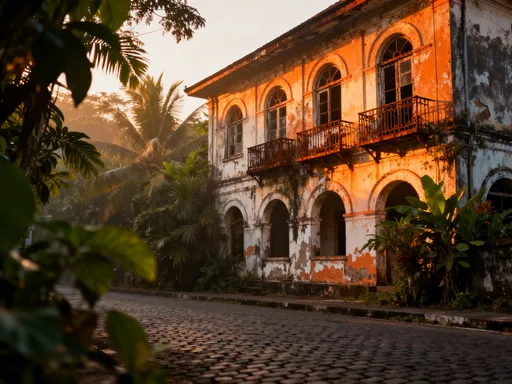
Just a short distance across the Bagmati River from Kathmandu lies Patan, a city that pulses with quiet dignity and deep-rooted tradition. Often overshadowed by its more famous neighbor, Patan holds its own as one of the three historic royal cities of the Kathmandu Valley, alongside Kathmandu and Bhaktapur. Designated as a UNESCO World Heritage Site in 1979, Patan—also known as Lalitpur, meaning 'City of Beauty'—boasts a legacy that stretches back over a millennium. Its narrow, winding alleys are paved with red brick, worn smooth by centuries of foot traffic, and lined with three- and four-story buildings whose facades are alive with carvings of deities, mythical beasts, and floral motifs.
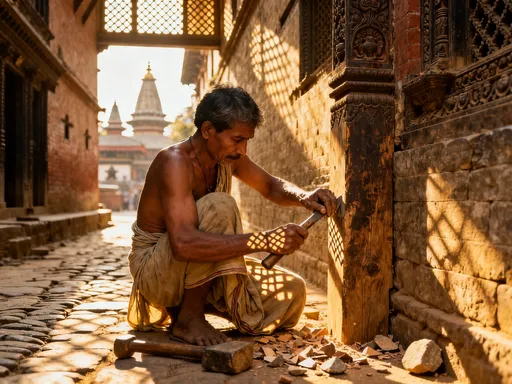
Arriving in Patan, one is immediately struck by the rhythm of daily life intertwined with sacred tradition. Monks in maroon robes walk silently past street vendors selling marigolds and incense, while the air carries the faint scent of butter lamps and roasted grains. Morning rituals unfold in open plazas, where elderly women kneel before small shrines, offering rice and prayers. This is not a city frozen in time, but one where history breathes through the present. The sound of chisels tapping against wood echoes from hidden workshops, a reminder that the artistry of the past is still very much alive.
What makes Patan exceptional is its uninterrupted continuity of culture. Unlike archaeological sites preserved behind glass, Patan’s heritage is lived and experienced every day. Families raise children in homes built centuries ago, artisans pass down techniques from father to son, and festivals follow calendars that have not changed in generations. This seamless blend of the ancient and the everyday gives Patan a rare authenticity, inviting visitors not just to observe, but to witness a living civilization.
The Heart of Heritage: Exploring Patan Durbar Square
At the center of Patan’s cultural and architectural identity lies Patan Durbar Square, a sprawling complex of palaces, temples, and courtyards that served as the royal seat of the Malla kings. Unlike the more chaotic energy of Kathmandu’s Durbar Square, Patan’s version exudes a sense of refined elegance and spiritual calm. Every structure here tells a story—of devotion, power, and artistic mastery. The square is not merely a tourist destination; it remains a vital part of the community, where daily worship, seasonal festivals, and civic life unfold in the shadow of towering pagodas.
One of the most striking features of the square is the Krishna Temple, a stone masterpiece built in the 17th century by King Siddhi Narsingh Malla. Its octagonal base supports a multi-tiered roof crowned with a gilded pinnacle, and its walls are adorned with intricate carvings depicting scenes from the Mahabharata and the life of Lord Krishna. The temple stands as a testament to both religious devotion and architectural innovation, blending Hindu and Buddhist influences in a way that reflects Nepal’s spiritual harmony. Nearby, the Royal Palace—known as the Mul Chowk and Sundari Chowk—offers a glimpse into the opulence of the Malla dynasty, with its exquisitely carved wooden windows and stone courtyards designed for both privacy and ceremony.
The square is also home to the Golden Temple, or Hiranya Varna Mahavihar, a Buddhist monastery that glows with warmth from its gilded doors and ornate woodwork. Inside, monks chant in low, resonant tones, while flickering oil lamps illuminate centuries-old thangka paintings. The coexistence of Hindu and Buddhist sites within the same complex speaks to the religious tolerance that has long defined Nepali society. Visitors are welcome to walk the perimeter, sit in quiet reflection, or observe rituals, always with a sense of reverence for the space’s ongoing spiritual function.
Wood, Stone, and Devotion: The Craftsmanship Behind the Facades
What truly sets Patan apart is not just the scale of its monuments, but the extraordinary craftsmanship embedded in every detail. The city is renowned for its mastery of wood, stone, and brick—materials shaped by hand into forms of enduring beauty. Look closely at any temple or traditional home, and you will find wooden struts carved with gods, demons, and celestial beings, each figure rendered with precision and expression. These struts are not merely decorative; they serve as structural supports, blending function with artistry in a way that modern architecture rarely achieves.
In the alleyways behind the main square, small workshops hum with activity. Artisans—many of them members of the Newari community—spend hours chiseling wood, shaping stone, or laying bricks with techniques passed down through generations. A single window, known as a *tiki jhyal*, can take weeks to complete, its latticework so fine it resembles lace. These windows are not only beautiful but practical, allowing light and air to enter while preserving privacy. The skill required to produce them is immense, and the knowledge is often kept within family lineages, making each piece a legacy in itself.
Stone carving is equally revered in Patan. Sculptors work with local sandstone and slate to create intricate reliefs, water spouts in the shape of divine figures, and statues of deities that grace temple entrances. One of the most iconic examples is the *makara* spout—a mythical water creature that channels rainwater from rooftops, often carved with such detail that individual scales and fangs are visible. These elements are not just artistic flourishes; they reflect a deep understanding of hydrology, aesthetics, and religious symbolism. The use of repurposed bricks from older structures also highlights a sustainable approach to building, long before the term became part of modern discourse.
Hidden Courtyards and Secret Temples: Beyond the Main Square
While Patan Durbar Square draws the most visitors, some of the city’s most profound experiences lie just beyond the main thoroughfares, in quiet residential alleys where time seems to slow. Here, tucked behind unassuming doorways, are the hidden courtyards—*chowks*—that form the heart of traditional Newari homes and monasteries. Sundari Chowk and Keshav Narayan Chowk are two of the most beautifully preserved, their symmetrical layouts and delicate carvings offering a glimpse into a more intimate side of Patan’s architectural heritage.
Sundari Chowk, located within the royal palace complex, is a masterpiece of 17th-century design. Its sunken courtyard is surrounded by intricately carved stone balustrades and wooden galleries, with a central water tank used for ritual purification. The space feels sacred and serene, a place designed for contemplation as much as ceremony. Though access is sometimes restricted due to conservation efforts, guided tours offer a rare opportunity to walk where royalty once lived. The preservation of such spaces is a testament to the community’s commitment to honoring its past, even as the city modernizes around it.
Keshav Narayan Chowk, less frequented by tourists, is equally enchanting. Nestled in a residential neighborhood, it retains the quiet dignity of a private sanctuary. The surrounding buildings feature traditional Newari architecture—brick walls, wooden beams, and ornate windows—all maintained with care. Unlike the grandeur of the main square, this courtyard feels personal, almost familial. It is not uncommon to see children playing near the steps or elders sitting in the shade, sipping tea. These spaces remind us that heritage is not only about monuments, but about the everyday lives they shelter.
Living Culture: How Architecture Shapes Daily Life
In Patan, architecture is not a relic of the past, but a living framework that shapes how people live, worship, and connect. Traditional Newari homes are built around central courtyards, which serve as communal spaces for cooking, storytelling, and family gatherings. These courtyards are more than architectural features—they are social and spiritual centers, fostering intimacy and continuity across generations. Even in modern constructions, many families strive to incorporate this design, recognizing its value in maintaining close-knit relationships.
Religious life is also deeply influenced by the city’s layout. Temples are not isolated structures but integrated into the urban fabric, often situated at crossroads or within residential blocks. This ensures that worship is accessible and woven into daily routines. During festivals like Indra Jatra or Bisket Jatra, the entire city transforms into a stage for ritual processions, masked dances, and communal feasts. The alignment of temples and squares allows for these events to unfold naturally, with space for crowds to gather and participate. The architecture, in this sense, does not merely accommodate culture—it enables it.
Observing daily life in Patan reveals a deep respect for tradition. Monks walk the same paths their predecessors did centuries ago, children learn folk songs in courtyards unchanged since the Malla era, and artisans continue to craft by hand in the same workshops their ancestors built. This continuity is not performative; it is genuine and unbroken. For visitors, the experience is not one of looking at history, but of stepping into it. The city does not put on a show—it simply lives as it always has, inviting others to witness its rhythm with humility and openness.
Preservation in Progress: Challenges and Community Efforts
Despite its resilience, Patan faces significant challenges in preserving its architectural treasures. The 2015 earthquake caused extensive damage to many historic buildings, including parts of the Durbar Square complex and numerous private homes. While international aid and government programs have supported reconstruction, the process has been slow and complex. One of the greatest concerns is the risk of losing traditional techniques if restoration relies too heavily on modern materials and methods. Concrete, steel, and machine-cut wood may be faster and cheaper, but they lack the authenticity and durability of handcrafted elements.
Thankfully, local organizations and skilled craftsmen are leading the way in culturally sensitive restoration. Groups like the Patan Museum and the Kathmandu Valley Preservation Trust work closely with artisans to ensure that rebuilding efforts use traditional methods and materials. Training programs have been established to pass on endangered skills, particularly among younger generations who might otherwise pursue urban careers. These initiatives recognize that preservation is not just about saving buildings, but about sustaining a way of life.
Urbanization also poses a threat. As Patan grows, pressure to expand infrastructure and accommodate modern needs can lead to the demolition of historic structures. However, many residents are pushing back, advocating for policies that balance development with heritage conservation. Some homeowners have chosen to restore rather than replace, investing in earthquake-resistant retrofitting that respects original design. These grassroots efforts reflect a deep pride in Patan’s identity and a collective determination to protect it for future generations.
Why Patan Matters: A Timeless Dialogue Between Past and Present
Patan’s enduring significance lies in its ability to maintain a dialogue between the past and the present. Its temples, courtyards, and alleyways are not static monuments, but dynamic spaces where history is lived, not just remembered. The city offers a rare model of cultural continuity, where artistry, spirituality, and community are not separate domains, but interwoven threads of daily existence. In a world increasingly defined by speed and disposability, Patan stands as a quiet rebuke—a reminder that beauty, meaning, and belonging can be built to last.
What makes Patan truly special is not just its visual splendor, but the values it embodies: patience, craftsmanship, reverence for tradition, and a deep connection to place. These are qualities that resonate deeply, especially for those who seek more than just a checklist of sights. For the thoughtful traveler, a visit to Patan is not a passive experience, but an invitation to slow down, observe, and reflect. It asks us to consider how we live, what we value, and how we might build communities that honor both heritage and humanity.
As you walk through Patan’s ancient alleys, you begin to understand that the city’s greatest treasure is not in its temples or carvings, but in its people—the artisans who shape wood with devotion, the families who raise children in centuries-old homes, the monks who chant in temples that have echoed with prayer for generations. They are the living heart of Patan, ensuring that its legacy is not preserved in silence, but carried forward in song, in craft, in daily life. To visit Patan is to witness a civilization that has not only survived but thrived, not by rejecting change, but by absorbing it with grace and wisdom. And that, perhaps, is the most beautiful discovery of all.