What They Don’t Tell You About Easter Island’s Hidden Protected Zones
You’ve seen the moai, but have you heard about the untouched side of Easter Island? I didn’t either—until I stepped beyond the tourist paths and found protected areas where nature thrives and silence speaks louder than history. These places aren’t just preserved; they’re alive. This is more than a trip—it’s a rare glimpse into a culture and ecosystem fighting to stay whole. And honestly? It changed how I see travel forever.
The Mask Behind the Moai: Easter Island’s Other Story
Easter Island, or Rapa Nui as it is known to its indigenous people, is often portrayed as a remote archaeological wonderland dominated by towering stone statues that gaze across time. The moai are undeniably powerful—over 900 of them scattered across the island, each carved with solemn expression and placed on ceremonial platforms called ahu. For decades, these figures have drawn travelers from every corner of the globe, eager to unravel the mystery of how such massive figures were moved and what led to the island’s ecological transformation. Yet behind the iconic façade of the moai lies a deeper, quieter narrative—one of resilience, ecological fragility, and ongoing cultural revival.
What most visitors don’t realize is that Easter Island is not merely a museum of ancient ruins. It is a living landscape shaped by centuries of human adaptation and, more recently, by deliberate efforts to heal damaged ecosystems. The island’s history includes periods of deforestation, resource scarcity, and colonial disruption, all of which left lasting marks on both land and people. Today, the Rapa Nui community is at the forefront of a movement to reclaim stewardship over their ancestral territory. This includes protecting areas that few tourists ever see—zones where native plants are returning, seabirds are nesting again, and traditional knowledge guides conservation.
Why do so many travelers miss this side of the story? In large part, it’s because tourism infrastructure has long focused on the most visually striking sites: Rano Raraku, the quarry where moai were carved; Ahu Tongariki, with its grand line of restored statues; and Orongo, the ceremonial village perched above the volcanic crater of Rano Kau. These are essential stops, yes, but they represent only a fraction of the island’s protected lands. Moreover, visitor information often emphasizes mystery and speculation rather than the present-day realities of environmental restoration and cultural continuity. As a result, many leave Rapa Nui moved by its past—but unaware of its present struggle and hope.
Stepping beyond the moai means embracing a different kind of journey—one that values balance over spectacle, respect over consumption. It means recognizing that the island’s true legacy isn’t just in stone, but in the soil, the shoreline, and the stories still being lived.
Rapa Nui National Park: More Than a UNESCO Label
Covering nearly 40% of Easter Island’s total area, Rapa Nui National Park is far more than a designation on a map or a line on a brochure. Established in 1935 and designated a UNESCO World Heritage Site in 1995, the park serves as a vital shield for both cultural and natural heritage. While many assume its primary purpose is to protect the moai, its mission extends well beyond archaeology. The park safeguards native plant species found nowhere else on Earth, preserves fragile coastal dunes, and maintains critical habitats for endemic birds and insects. It is, in essence, a sanctuary where culture and ecology are inseparable.
What makes this park unique is that it is co-managed by the Chilean National Forest Corporation (CONAF) and the Rapa Nui community. This partnership reflects a growing recognition that true conservation cannot succeed without the involvement of those who have lived on the land for generations. Local guides, elders, and environmental committees play active roles in monitoring wildlife, restoring vegetation, and educating visitors. Their knowledge—passed down orally and refined through modern ecological science—shapes how the park is maintained and accessed.
Within the park’s boundaries are numerous zones that remain largely unseen by casual tourists. These include high-altitude grasslands, inland forests undergoing reforestation, and coastal stretches where access is limited to protect nesting seabirds. One such area is the Poike Peninsula, a volcanic remnant in the island’s far east. Once heavily eroded due to grazing and deforestation, it is now part of a long-term restoration project focused on replanting native trees like toromiro and mako’i. Visitors can join guided walks here, learning not only about ancient petroglyphs but also about soil stabilization techniques and the return of pollinators.
Another lesser-known site is the Terevaka highlands, the island’s highest point. From its slopes, one can see the curvature of the Earth on clear days—but more importantly, one can observe how wind patterns and rainfall influence reforestation efforts. The park uses these areas to test which native species thrive under current climate conditions, ensuring that restoration is both meaningful and sustainable. These quiet zones may lack the drama of a row of moai, but they are where the future of Rapa Nui is being quietly rebuilt.
Coastal Sanctuaries: Where Land Meets Legacy
The coastline of Easter Island is not just scenic—it is sacred. For the Rapa Nui people, the ocean has always been a source of life, identity, and spiritual connection. Today, several coastal areas are protected not only for their ecological value but also for their cultural significance. Among the most notable are Anakena and Ovahe Beaches, both located within the national park and managed with care to balance public access with environmental preservation.
Anakena, with its white coral sand and swaying palm trees, is one of the few sandy beaches on the island and a popular destination for visitors. But beneath its postcard beauty lies a story of recovery. Decades ago, strong winds and unchecked foot traffic led to significant dune erosion. In response, conservationists and community members launched a dune stabilization project using native plants like nga’atu (Sporobolus virginicus), which have deep root systems that hold sand in place. Today, wooden boardwalks guide visitors across the dunes, preventing trampling while allowing unobstructed views of the turquoise water. The success of this initiative has become a model for other coastal zones.
Nearby Ovahe Beach, nestled between red cliffs and volcanic rock, is even more secluded. Its pink-hued sand—created by crushed coral and shells—makes it a favorite among photographers, but access is intentionally limited. The area serves as a nesting ground for sooty terns and other seabirds, and seasonal closures are enforced to protect breeding cycles. Local guides often speak of Ovahe as a place of reflection, where the sound of waves carries ancestral voices. Traditional fishing boundaries, known as rahui, are still observed here, with certain areas closed to fishing during spawning seasons—a practice rooted in sustainability and respect.
These coastal sanctuaries remind us that conservation is not just about fences and rules. It is about relationships—between people and the sea, between past and present, between use and restraint. When visitors walk these shores mindfully, they participate in a legacy of care that has endured for centuries.
The Highlands’ Secret: Rano Kau and Beyond
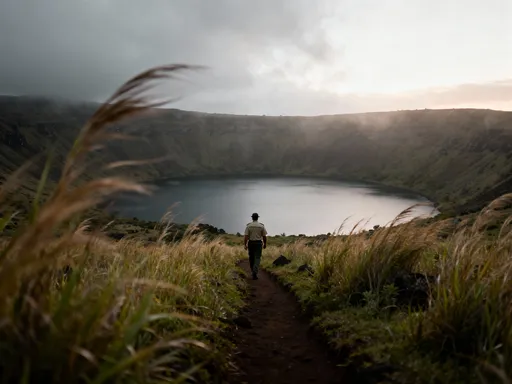
Rising dramatically from the southwestern edge of the island, the Rano Kau volcano forms one of Easter Island’s most striking landscapes. Its nearly circular crater, over a kilometer wide, holds a freshwater lake that supports rare insects and bird species found nowhere else. The surrounding highlands are part of a protected ecological zone where access is tightly controlled to prevent disturbance. This is not a place for casual exploration; it is a refuge for life in its most delicate forms.
The Rano Kau area is also deeply significant culturally. On its rim sits Orongo, the ceremonial village associated with the Tangata Manu, or birdman cult, which flourished after the decline of moai construction. Each year, warriors from rival clans would descend the cliffs to swim to the nearby islet of Motu Nui, hoping to retrieve the first sooty tern egg of the season. The winner’s clan would gain status and privileges for the coming year. This ritual, which lasted until the late 19th century, reflects a shift in Rapa Nui society—from ancestor worship to a system based on competition and natural cycles.
Today, Orongo is preserved as a key archaeological site, but the surrounding highlands serve an even broader purpose. The crater’s microclimate supports mosses, ferns, and unique insect populations that have adapted to its humid, sheltered environment. Conservationists monitor water quality in the lake and track bird migrations to understand how climate change may be affecting the island’s biodiversity. Invasive species, particularly rats and non-native plants, are actively managed to prevent them from disrupting this fragile balance.
Visitors can access Rano Kau through guided eco-tours that emphasize education and minimal impact. These tours often include talks on cloud formation, watershed systems, and the importance of fog capture—a natural process where moisture from the ocean condenses on vegetation and drips into the soil. Guides stress that every footprint matters; even a single piece of litter or off-trail step can have lasting consequences. By framing the visit as a privilege rather than a right, these programs foster a sense of responsibility in travelers.
Off-the-Beaten-Path Reserves: Local Guardianship in Action
Beyond the boundaries of the national park, a network of smaller, community-led conservation areas plays a crucial role in Rapa Nui’s ecological recovery. These reserves are often managed by Rapa Nui families or cooperatives who have inherited land from their ancestors and are choosing to use it for restoration rather than development. Unlike official parks, these sites rarely appear on tourist maps—but they are where some of the most meaningful work is happening.
One such initiative is the reforestation project at Maunga Tari, a hillside area once stripped of vegetation. Led by a local cooperative, the effort involves planting thousands of native trees each year, including the rare toromiro, which was once thought extinct in the wild. Seeds are collected, nurtured in community greenhouses, and then transplanted with care. Volunteers—both Rapa Nui and visiting researchers—track growth rates, soil health, and insect activity. Over time, these efforts are transforming barren slopes into thriving micro-forests.
Another example is the sustainable agriculture zone near Hanga Piko, where families practice traditional farming methods using stone windbreaks and crop rotation. They grow sweet potatoes, taro, and bananas using organic techniques, avoiding chemical fertilizers that could leach into groundwater. Some of these farms also host educational visits, allowing travelers to learn about food sovereignty and the importance of local diets in maintaining health and cultural identity.
These grassroots efforts are not just environmental—they are acts of cultural reclamation. By restoring the land, the Rapa Nui people are also revitalizing language, stories, and practices that were nearly lost. When a child learns to plant a native tree or identifies a bird by its traditional name, a thread of continuity is strengthened. These reserves may be small in size, but their impact is profound.
Traveler’s Responsibility: How to Visit Right
With only around 9,000 residents and a land area of just 164 square kilometers, Easter Island is exceptionally vulnerable to the pressures of tourism. Each year, tens of thousands of visitors arrive by plane, drawn by the island’s mystique. While tourism brings economic benefits, it also poses risks: overcrowding at key sites, waste management challenges, and unintended damage to fragile ecosystems. The question is not whether people should visit—but how they can do so in a way that honors rather than harms.
The answer lies in responsible travel choices. First and foremost, visitors should prioritize certified eco-tours operated by Rapa Nui-owned businesses. These guides are trained in both cultural sensitivity and environmental protection, and their tours often include contributions to local conservation funds. When hiking, it is essential to stay on marked trails, respect all signage, and never remove natural or cultural materials—no rocks, no plants, no artifacts. Even seemingly harmless actions, like feeding birds or walking on dunes, can disrupt delicate systems.
Permits are required for certain areas, especially those within the national park or near archaeological sites. These are not bureaucratic hurdles—they are tools to manage visitor flow and protect sensitive zones. Travelers should also be mindful of seasonal restrictions, particularly during seabird nesting periods or times of drought when water resources are strained. Simple actions, like carrying reusable water bottles and minimizing plastic use, go a long way in reducing environmental impact.
Equally important is supporting the local economy in meaningful ways. This means eating at family-run restaurants, buying crafts directly from artisans, and choosing accommodations owned by Rapa Nui families. When tourism revenue stays within the community, it empowers locals to lead conservation efforts and maintain cultural pride. Responsible travel, then, is not about sacrifice—it is about alignment. It is about ensuring that every visit contributes, however slightly, to the island’s resilience.
The Future of Rapa Nui: Preservation as Survival
The challenges facing Easter Island are complex and interconnected. Climate change brings rising sea levels that threaten coastal sites and freshwater lenses. Overtourism strains infrastructure and risks commodifying sacred spaces. Limited resources—especially water and arable land—require careful management. Yet amidst these pressures, there is also a powerful movement toward self-determination and ecological healing. The protection of hidden zones is not a nostalgic gesture—it is a necessity for survival.
For the Rapa Nui people, preservation is not separate from daily life. It is woven into farming, fishing, storytelling, and governance. The return of native forests is not just about carbon capture—it is about restoring the breath of the island. The protection of nesting birds is not just about biodiversity—it is about honoring ancestral connections to nature. Every conservation decision carries cultural weight, and every success strengthens identity.
As travelers, we have a choice. We can approach Rapa Nui as a destination of mystery to be consumed, or we can see it as a living culture inviting us to witness its resilience. We can be passive observers, or we can become respectful participants in a story that is still unfolding. The moai may be silent, but the land speaks clearly: it asks for care, for attention, for continuity.
Visiting Easter Island’s hidden protected zones is not about finding secret spots for the sake of exclusivity. It is about shifting perspective—seeing beyond the statues to the systems that sustain them. It is about understanding that true wonder lies not only in what has been built, but in what is being rebuilt. And it is about realizing that every traveler, with every step, can choose to leave not just footprints, but a legacy of respect.