This Is What Happens When Ancient Stones Whisper Secrets in Crete
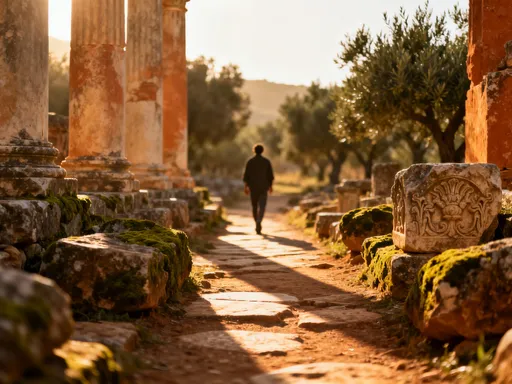
Stepping into Crete feels like entering a living museum where time bends. The island doesn’t just show its history—it breathes it through weathered columns, hidden courtyards, and stone pathways worn smooth by centuries. I came for the sun and sea, but stayed for the architecture—unexpected, profound, and deeply human. From Minoan palaces to hillside villages, every structure tells a story older than words. These are not ruins frozen in silence, but living forms that continue to shape how people live, gather, and remember. In Crete, architecture is not merely built; it evolves, adapts, and endures—carrying forward a legacy written in limestone, sandstone, and the quiet strength of centuries-old craftsmanship.
First Glimpse: Arrival in Heraklion and the Pulse of Stone
From the moment you step off the plane in Heraklion, Crete announces itself through texture. The city rises gently from the coastal plain, its skyline modest and grounded, shaped more by the color of stone than by height or spectacle. Buildings, both old and new, are often faced with local limestone—warm beige, slightly golden in the morning light, cooling to soft gray at dusk. This material choice is not merely aesthetic; it reflects a deep-rooted relationship between the people and the land. Limestone has been quarried here for millennia, used in everything from Minoan foundations to modern homes. Its thermal properties help regulate indoor temperatures, a practical wisdom passed down through generations.
Walking through Heraklion’s streets, one notices how contemporary architecture often defers to tradition. Even newer buildings maintain low profiles, with flat or gently sloping roofs and shaded balconies. Windows are framed with stone lintels, and doorways echo the proportions of older homes. This continuity is not enforced by rigid regulations alone, but by a shared cultural instinct—an understanding that harmony with the past is a form of resilience. The city does not resist modernity, but filters it through a lens of memory.
The Heraklion Archaeological Museum serves as the ideal introduction to this architectural lineage. Housing the most comprehensive collection of Minoan artifacts in the world, it offers more than pottery and jewelry—it reveals a civilization deeply attuned to spatial design. Models of ancient palaces, frescoes depicting grand staircases and light-filled courtyards, and reconstructed columns all point to a society that valued beauty, function, and innovation. Visitors leave not only with historical knowledge, but with a sense of how design can reflect a culture’s soul. The museum itself, recently renovated with natural light and open galleries, mirrors this philosophy—honoring the past while embracing clarity and accessibility.
Knossos: Where Myth and Masonry Meet
A short distance from the city center lies Knossos, the largest Bronze Age archaeological site on Crete and once the ceremonial and political heart of the Minoan civilization. To walk through its reconstructed corridors is to step into a world far more advanced than one might expect from 3,500 years ago. The palace complex spans over 20,000 square meters and was originally built around 1900 BCE, rebuilt after earthquakes, and continuously inhabited for centuries. What strikes the modern visitor is not just its scale, but its sophistication—this was not a fortress, but a center of art, administration, and daily life.
The layout of Knossos defies the linear symmetry often associated with ancient architecture. Instead, it unfolds organically, with multiple levels connected by grand staircases, light wells, and corridors that seem to lead in unexpected directions. This intentional complexity may have inspired the myth of the Minotaur’s labyrinth. Yet beyond legend, the design reveals a keen understanding of ventilation, privacy, and the flow of movement. Rooms were arranged to maximize natural light and air circulation, with upper stories providing shaded outdoor spaces.
Equally impressive are the engineering feats embedded in the ruins. Knossos featured one of the earliest known multi-room plumbing systems, with terracotta pipes carrying both fresh water and wastewater. Toilets, some with flushing mechanisms, were connected to underground drainage channels—an innovation rare even in later civilizations. Storage areas held massive pithoi, or clay jars, capable of holding thousands of liters of oil, wine, and grain, suggesting a highly organized economy. Frescoes on surviving walls depict leaping dolphins, griffins, and courtly processions, their vibrant colors hinting at a culture that celebrated nature and ritual.
While Sir Arthur Evans’ early 20th-century reconstructions remain controversial—some critics argue they project modern assumptions onto ancient forms—there is no denying their value in helping visitors visualize the palace’s grandeur. The use of reinforced concrete and color-coded columns may not be historically exact, but they provide a tangible sense of space and scale. More importantly, Knossos challenges the assumption that ancient societies were primitive. Here, architecture served not just kings or gods, but people—facilitating comfort, hygiene, and community.
Chania’s Venetian Harbor: Layers of Light and Legacy
If Heraklion speaks of antiquity and administration, Chania whispers of romance and resilience. Nestled on the northwest coast, its harbor is one of the most photographed in the Mediterranean, a crescent of calm water framed by a Venetian lighthouse, Ottoman-era houses, and a fortress wall that has stood guard since the 14th century. The atmosphere is intimate, almost dreamlike—sunlight glances off turquoise waves, cafes spill onto wooden decks, and the scent of jasmine drifts from hidden gardens. But beneath this charm lies a complex architectural history shaped by conquest, trade, and adaptation.
The harbor’s current form owes much to Venetian engineers, who fortified the port between the 13th and 17th centuries to protect their maritime empire. The iconic lighthouse, originally built in 1595, was later rebuilt by the Egyptians in the 1830s, blending European and Eastern influences. The surrounding buildings, once homes to merchants and sailors, feature arched doorways, shuttered windows in deep blue or green, and wrought-iron balconies heavy with bougainvillea. These homes were designed for the climate—thick stone walls keep interiors cool, while high ceilings allow hot air to rise.
What makes Chania’s architecture remarkable is its continuity. Unlike cities where modern development has erased the past, Chania has preserved its historic core through careful restoration and adaptive reuse. Old warehouses now house restaurants; former customs offices have become art galleries. Narrow alleyways, paved with cobblestones, wind uphill from the waterfront, revealing hidden courtyards and family homes tucked behind ivy-covered walls. The city’s preservation committee ensures that renovations respect original materials and proportions, maintaining a harmonious streetscape.
This respect for heritage is not merely nostalgic—it supports the local economy and quality of life. Residents take pride in their homes, often passing them down through generations. Tourists, in turn, are drawn not just to the scenery, but to the authenticity of the experience. In an age of mass tourism, where destinations risk becoming generic, Chania demonstrates how architecture can anchor identity. Every restored shutter, every repointed stone, is a quiet act of resistance against homogenization.
Rethymno’s Old Town: A Symphony in Sandstone
Further east along the coast, Rethymno offers a quieter, more residential counterpoint to Chania’s bustling harbor. Its Old Town, enclosed by 16th-century Venetian walls, feels like a living neighborhood rather than a museum exhibit. Here, architecture is not just admired—it is inhabited, cared for, and continuously renewed. The dominant material is sandstone, a softer, warmer stone than limestone, giving the buildings a honeyed glow at sunset. Roofs are tiled in deep red, and wooden balconies with latticework railings overlook narrow streets paved with rounded stones.
Wandering through Rethymno’s alleys, one is struck by the consistency of scale and proportion. Buildings rarely rise above three stories, and their facades follow a familiar rhythm: a ground-floor shop or workshop, a central doorway, and upper-level living quarters with shuttered windows. Many homes feature small inner courtyards, private sanctuaries where families grow herbs, hang laundry, or sip coffee in the shade. These courtyards are not luxuries—they are practical responses to the Mediterranean climate, providing ventilation and privacy in dense urban fabric.
One of the most atmospheric streets is Koundouriotou, lined with restored mansions that once belonged to wealthy merchants. Their facades are adorned with carved stone frames, decorative cornices, and ornate door knockers. Today, some serve as boutique hotels, others as family homes. The city’s commitment to preservation is evident in the meticulous attention to detail—original wooden beams are reinforced rather than replaced, and traditional plaster finishes are reapplied by hand. This approach ensures that renovations do not erase the marks of time, but integrate them into the present.
Rethymno also exemplifies how urban design can foster community. The central square, with its Venetian fountain and shaded cafes, remains the heart of social life. Children play near the clock tower, elders gather for coffee, and musicians perform on weekends. The architecture supports these interactions—benches are built into walls, arcades provide shelter from rain or sun, and sightlines remain open, creating a sense of safety and connection. In this way, the built environment does not merely shelter people; it nurtures the rhythms of daily life.
Mountain Villages: Anogia and the Spirit of the Highlands
To understand the full breadth of Cretan architecture, one must leave the coast and climb into the island’s rugged interior. The village of Anogia, perched on the northern slopes of Mount Ida at over 800 meters above sea level, offers a stark contrast to the maritime towns below. Here, the landscape is harsher, the winds stronger, and the architecture more utilitarian—yet no less beautiful. Houses are built from local schist and slate, their dark stone walls rising like extensions of the mountain itself. Roofs are heavy with slate tiles, designed to withstand snow and gales, and windows are small to retain heat.
Anogia’s history is one of resistance and resilience. Destroyed multiple times for its role in uprisings against foreign rule, the village has been rebuilt with the same determination that defines its people. Architecture here is not a luxury, but a necessity shaped by survival. Homes are compact, often two or three rooms arranged around a central hearth. Interiors are simple—wooden furniture, woven rugs, and icons on the walls—but filled with warmth and dignity. The use of local materials reduces costs and environmental impact, while traditional techniques ensure durability.
What sets Anogia apart is its commitment to cultural preservation. While tourism has reached the village, development is carefully managed to avoid commodification. Guesthouses are family-run, meals are home-cooked, and visitors are encouraged to learn about local music and weaving traditions. Architects and builders continue to use time-tested methods, passing skills from elders to youth. This continuity is not accidental—it is a conscious choice to resist the homogenizing forces of mass tourism.
The village also exemplifies sustainable building practices long before the term existed. Rainwater is collected in cisterns, heating comes from wood stoves, and waste is minimized. There is no reliance on imported materials or energy-intensive systems. In an era of climate uncertainty, Anogia offers a model of how communities can live in balance with their environment. Its architecture is not static; it evolves, but always with respect for place, memory, and self-reliance.
Monasteries Carved into Silence: Arkadi and Preveli
Scattered across Crete’s mountains and gorges are monasteries that serve as both spiritual sanctuaries and architectural marvels. Among the most significant are Arkadi and Preveli, each embodying a unique blend of devotion, defense, and design. These complexes were not built for solitude alone—they were centers of learning, agriculture, and resistance, often serving as refuges during periods of occupation. Their architecture reflects this dual role: fortified walls enclose peaceful courtyards, churches rise with domed roofs, and bell towers stand like sentinels against the sky.
Arkadi Monastery, located in the Rethymno region, is best known for the tragic events of 1866, when hundreds of rebels and civilians took shelter there and chose to detonate gunpowder rather than surrender to Ottoman forces. The site today is both a place of worship and a national memorial. Its architecture is imposing yet serene—rectangular in plan, with a central courtyard surrounded by two-story arcades. The church of St. Constantine and St. Helen features a wooden iconostasis carved with intricate detail, and the surviving library once held rare manuscripts. Thick stone walls, small windows, and a single fortified gate speak to its defensive purpose, while the symmetry and proportion of the cloisters reflect a deep sense of order and contemplation.
Preveli Monastery, nestled near the Libyan Sea, presents a different character. Surrounded by palm trees and freshwater springs, it feels more integrated with nature. Founded in the 12th century and rebuilt after multiple destructions, it served as a center of education and resistance. Its church, dedicated to St. John the Baptist, combines Byzantine and Renaissance elements, with a barrel-vaulted roof and frescoed walls. The monks cultivated terraced gardens and maintained a scriptorium, preserving religious and scientific texts. Today, the monastery remains active, with a small brotherhood continuing its traditions.
Both sites demonstrate how architecture can embody spiritual values. Spaces are designed to encourage reflection—courtyards open to the sky, chapels are dimly lit and quiet, and walkways are lined with olive trees. There is no grandiosity for its own sake; beauty arises from simplicity, proportion, and the careful use of light and shadow. These monasteries are not relics, but living institutions that continue to shape Cretan identity. They remind us that buildings can be more than shelters—they can be vessels of memory, faith, and endurance.
Modern Echoes: How Tradition Informs Today’s Design
In recent years, a new generation of Cretan architects has emerged, one that seeks not to imitate the past, but to converse with it. Across the island, contemporary homes and public buildings are being designed with clear references to traditional forms—low profiles, shaded terraces, courtyards open to the sky, and the continued use of local stone. These are not pastiches, but thoughtful reinterpretations that respond to modern needs while honoring ancestral wisdom.
One example is the growing trend of eco-friendly villas that blend into the landscape. Rather than dominating the terrain, these homes are embedded into hillsides, their roofs covered with native plants. Walls are thick for insulation, windows are strategically placed for cross-ventilation, and solar panels are discreetly integrated. Architects often collaborate with local stonemasons, ensuring that craftsmanship remains a living tradition. The result is buildings that feel both modern and timeless—comfortable, sustainable, and deeply rooted in place.
Public projects, too, reflect this ethos. Community centers, schools, and cultural spaces increasingly incorporate open courtyards, shaded arcades, and natural materials. In Heraklion, the new conference center features a colonnaded façade inspired by Minoan palaces, while using state-of-the-art energy systems. These designs do not reject innovation—they channel it through a cultural lens, ensuring that progress does not come at the cost of identity.
Interviews with local architects reveal a shared philosophy: that good design begins with listening. Listening to the land, to climate, to history, and to the needs of people. One architect described the process as “building with memory,” where every decision—from material to orientation—is informed by centuries of experience. This approach not only creates more sustainable buildings, but fosters a deeper emotional connection between inhabitants and their environment.
Conclusion
Crete’s architecture isn’t frozen in the past—it’s a conversation across millennia. Each stone, arch, and courtyard invites us not just to look, but to listen. In preserving these forms, the island teaches us how to build not only for shelter, but for soul. From the labyrinthine halls of Knossos to the quiet courtyards of mountain villages, from Venetian harbors to modern eco-homes, there is a thread of continuity—a respect for material, climate, and community that transcends time.
What makes Cretan architecture truly remarkable is not its age, but its adaptability. It has absorbed influences from Minoans, Romans, Byzantines, Venetians, Ottomans, and Egyptians, yet retained a distinct identity. It resists both erasure and imitation, choosing instead a path of thoughtful evolution. In doing so, it offers a powerful lesson for the modern world: that progress need not mean rupture, and that the wisdom of the past can illuminate the future.
For the traveler, this means more than sightseeing—it means experiencing a way of life where beauty, function, and meaning are inseparable. It means walking through a harbor and feeling the weight of centuries in the stone beneath your feet, or sitting in a village square and understanding how design shapes belonging. Crete does not offer escape; it offers connection—to history, to place, and to the quiet strength of those who build not for fame, but for generations.
In the end, the whispers of ancient stones are not about glory or conquest. They speak of resilience, care, and continuity. They remind us that how we build reflects who we are—and who we hope to become. To visit Crete is to hear that whisper. To listen is to be changed.