You Won’t Believe Manila’s Hidden Festival Culture
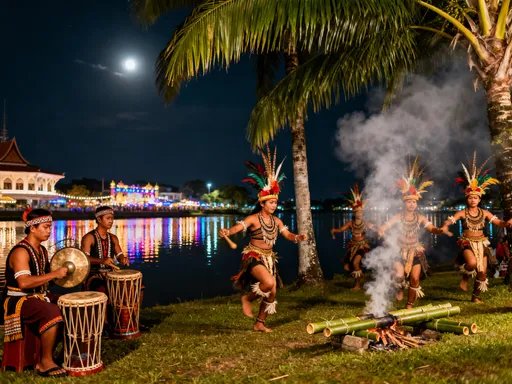
Manila isn’t just about skyscrapers and traffic—you’d be shocked how alive its underground festival scene truly is. I stumbled upon a world where ancient traditions pulse through backstreet barrios, where drumbeats echo at midnight, and communities transform ordinary streets into vibrant stages. This isn’t the Manila tourists see—it’s raw, real, and rarely shared. If you’ve ever wanted to experience culture that’s felt, not photographed, this is it. Beneath the city’s modern surface beats a rhythm of devotion, color, and communal pride that survives in quiet corners, far from guidebooks and tour buses. These are not staged performances for visitors, but living expressions of identity, faith, and resilience passed down through generations.
The Secret Pulse of Manila: Beyond the Tourist Brochure
When most travelers think of Manila, they envision the historic walls of Intramuros, the bustling bazaars of Divisoria, or the gleaming malls of Makati. Yet, beyond these well-trodden paths lies a cultural heartbeat few ever witness—a network of intimate, community-led festivals that thrive in the city’s barangays, the smallest administrative units in the Philippines. These celebrations are not designed for tourism brochures or social media highlights; they are deeply rooted in local life, emerging from the rhythms of faith, family, and shared history. Unlike large-scale events like the Ati-Atihan or Sinulog, which draw national attention, these neighborhood festivals unfold quietly, often unnoticed by outsiders, yet they carry immense significance for those who live them.
What makes these festivals so different is their authenticity. They are not curated for spectacle but born out of necessity—spiritual, emotional, and social. In many barangays, a festival is more than a date on the calendar; it’s a moment of collective renewal, a time when neighbors come together to honor saints, commemorate harvests, or express gratitude after a year of challenges. There are no ticketed entries or VIP sections—just open streets filled with music, prayer, and food shared among friends and strangers alike. The energy is palpable, not because it’s loud or flashy, but because it’s genuine. These gatherings reflect the soul of Manila not as a global city, but as a constellation of close-knit communities bound by tradition and mutual care.
Despite their importance, these events remain largely invisible to the wider world. Part of this is by design—many communities value the intimacy of their celebrations and prefer to keep them local. Others simply lack the resources or desire to promote themselves on a larger scale. But there’s also a deeper reason: the fear that exposure might dilute their meaning. When traditions become commodified, they risk losing their spiritual essence. The concern is real—some neighborhoods have seen their quiet processions turn into crowded tourist attractions, where cameras outnumber worshippers and reverence gives way to entertainment. For many residents, preserving the sanctity of these moments means keeping them hidden, shared only with those who come not to observe, but to participate with respect.
When Tradition Takes the Streets: The Spirit of Barangay Festivals
At the heart of Manila’s hidden festival culture lies the barangay—a microcosm of Filipino society where kinship, faith, and civic duty intertwine. Each barangay, often centered around a local church or plaza, functions as a self-sustaining community with its own customs, leadership, and calendar of events. It is here, in these small districts, that the most enduring festivals are born and sustained. While some align with national religious holidays, many are unique to the neighborhood, shaped by its history, patron saint, or founding families. These celebrations are not imported or imitated—they grow organically from the soil of everyday life.
One of the most widespread traditions seen across Manila’s barangays is the Santacruzan, a procession held during the month of May that reenacts the search for the True Cross by Queen Helena, mother of Emperor Constantine. Each year, young women dressed in elegant gowns represent different biblical and historical figures, walking in solemn yet joyful parades accompanied by hymns and prayers. Though variations exist in every district, the core meaning remains the same: a public expression of faith, gratitude, and cultural continuity. Similarly, the Flores de Mayo, a daily offering of flowers to the Virgin Mary throughout May, transforms quiet streets into moving altars, with children placing blossoms at makeshift shrines while elders lead devotional songs.
These festivals are not merely religious observances—they are social anchors. They bring together generations who might otherwise drift apart. Grandparents teach grandchildren the lyrics of traditional hymns, while parents and teenagers work side by side to decorate processional routes or prepare communal meals. In a rapidly modernizing city, such moments offer stability and connection. For many families, participating in the barangay festival is as essential as celebrating Christmas or New Year’s. It is a time when roles shift—shopkeepers become organizers, students become performers, and the elderly become storytellers. The festival becomes a living archive, preserving language, music, and ritual in ways no museum ever could.
A Sensory Journey: What It Feels Like to Be There
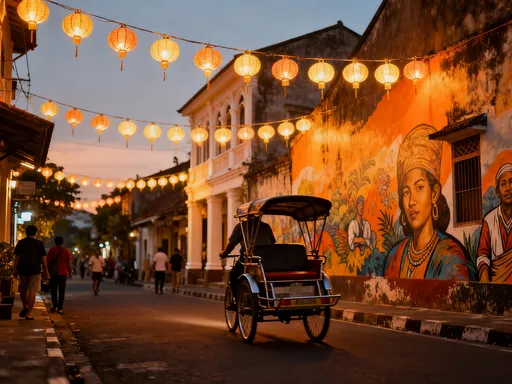
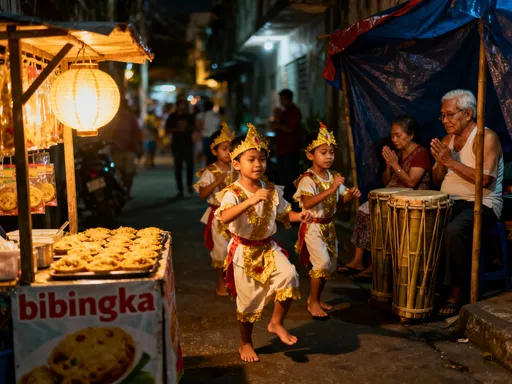
To walk into one of these hidden festivals is to step into a world where time slows and senses awaken. Imagine arriving at dusk, when the air carries the warm, buttery scent of bibingka, a rice cake baked in clay ovens, and the rich aroma of tsokolate, thick Filipino hot chocolate served in clay cups. Strings of colored lights flicker above narrow streets, illuminating hand-painted banners and garlands of sampaguita, the national flower. From a distance, you hear the steady beat of bamboo drums and the melodic strum of a native kundiman played on an old guitar. Children in handmade costumes—some dressed as angels, others as saints—laugh and chase each other between rows of wooden stalls selling sweet tamales and fried banana fritters.
As the procession begins, the mood shifts. A hush falls as the image of the patron saint is carried forward on a flower-bedecked carriage, surrounded by candle-bearing devotees. The glow of hundreds of flames dances on faces marked by quiet devotion. You might be handed a candle yourself—a small gesture, but one that signals inclusion. Suddenly, you are no longer a visitor, but part of the moment. When the prayer begins, led by a local elder, voices rise in unison, not for performance, but for presence. There is no stage, no microphone—just the raw power of shared belief echoing through the night.
What sets this experience apart is participation. Unlike tourist-oriented festivals where you watch from a barrier, here you are invited in. A neighbor might offer you a plate of pancit, a noodle dish symbolizing long life, or an elder may gently correct your pronunciation of a prayer. These small acts create bonds that last beyond the evening. You begin to understand that this is not entertainment—it is life lived in full color and deep feeling. The music, the food, the rituals—they are not separate elements, but threads in a single fabric of community. To be there is to feel, for a brief moment, what it means to belong.
How to Find These Hidden Celebrations (Without Being Intrusive)
Discovering Manila’s hidden festivals requires patience, humility, and a willingness to move off the beaten path. Unlike major city events with official websites and press releases, these celebrations are often announced only within the community—through word of mouth, church bulletins, or handwritten posters taped to lampposts. The best way to learn about them is to build relationships. Staying in locally owned guesthouses, attending Sunday Mass in neighborhood churches, or speaking with small business owners can open doors to invitations that no guidebook can provide.
Timing is also crucial. The months of May and November are particularly rich in local observances. May, dedicated to the Virgin Mary, sees widespread celebrations of Flores de Mayo and Santacruzan in countless barangays. November, with All Saints’ Day and All Souls’ Day, brings families together at cemeteries and neighborhood chapels, often accompanied by quiet vigils, lantern processions, and shared meals. Lent, especially Holy Week, is another key period when many communities hold pre-dawn prayers, reenactments of the Stations of the Cross, and candlelit processions that begin in the middle of the night.
When you do attend, your behavior matters deeply. Dress modestly—avoid shorts, sleeveless tops, or flashy clothing that might draw attention away from the occasion. Bring a small offering if possible: a candle, a bouquet of flowers, or even a simple donation to the church fund. Ask permission before taking photographs, especially of individuals in prayer or religious roles. A smile and a polite “Pwede po ba?” (“Is it okay?”) in basic Tagalog go a long way. Remember, you are a guest, not a consumer. Your presence should honor the space, not disrupt it. If invited to eat or pray, accept graciously—even a small gesture of participation shows respect.
The Role of Faith and Community in Sustaining Tradition
At the core of Manila’s hidden festivals is a deep intertwining of Catholic faith and indigenous cultural values. While the rituals often follow Catholic liturgy—feast days, processions, novenas—they are infused with pre-colonial sensibilities of communal harmony, gratitude to nature, and reverence for ancestors. The church is not just a place of worship but a hub of social life, where festivals are planned, funds are raised, and meals are prepared. Priests and lay leaders work side by side with volunteers, often spending weeks organizing decorations, coordinating performers, and ensuring that even the poorest families can participate.
What makes these festivals sustainable is the culture of bayanihan—the Filipino spirit of communal unity and cooperation. During preparation days, neighbors gather to cook, build stages, and sew costumes. No one is paid; everyone contributes. A mother might spend days rolling lumpia, while a teenager helps string lights across the street. This collective effort strengthens social bonds and reinforces a sense of shared identity. For many, being part of the festival is not optional—it is a duty, a way of giving back to the community that has given them so much.
Importantly, these events are not about performance. They are acts of devotion, memory, and resilience. When a barangay celebrates its patron saint, it is not only honoring a religious figure but also commemorating its own survival—through storms, economic hardship, or urban change. The festival becomes a testament to endurance, a declaration that despite modern pressures, the community remains rooted in its values. Children who grow up participating learn not just rituals, but responsibility, humility, and the importance of belonging. In this way, the festival is not just preserved—it is lived, renewed each year through the hands and hearts of those who carry it forward.
Challenges and Changes: Modern Life vs. Cultural Preservation
Despite their strength, Manila’s hidden festivals face growing pressures. Urbanization has transformed many traditional neighborhoods into dense residential zones, leaving little space for street processions or open-air celebrations. Rising costs make it harder to fund events without external sponsorship, which sometimes brings unwanted commercial influence. Meanwhile, younger generations, drawn to digital culture and global trends, sometimes view these traditions as outdated or irrelevant. In some areas, attendance has declined, and the burden of organization falls increasingly on older residents.
Yet, many communities are finding ways to adapt without losing their essence. Some have embraced social media to share snippets of their festivals—not for tourism, but to reconnect with former residents and inspire younger members. Others have introduced contemporary music or art installations while keeping core rituals intact. In one barangay, a youth group began filming oral histories of elders, turning them into short documentaries shown during festival nights. These innovations do not replace tradition—they breathe new life into it, making it accessible without diluting its meaning.
The challenge lies in balance. Visibility can bring support, but it can also bring exploitation. Some neighborhoods have seen their quiet devotions turned into photo opportunities for influencers, disrupting the solemnity of the event. Others worry that as festivals gain attention, they may be pressured to “perform” rather than simply “be.” The solution, many leaders agree, is not to shut out the world, but to set boundaries. Invitations should be extended with care, participation should be respectful, and the focus must remain on community, not spectacle. Tradition does not have to be frozen in time to be authentic—it can evolve, as long as its heart remains unchanged.
Why This Hidden Culture Matters—And How to Honor It
Manila’s hidden festivals are more than cultural relics—they are living proof of resilience, faith, and human connection. In a world increasingly dominated by digital isolation and fast-paced consumption, these moments remind us of the power of presence, of gathering, of sharing life in its most unfiltered form. They challenge the notion that travel must be about seeing famous landmarks or collecting experiences for social media. True cultural engagement is quieter, deeper—it happens when you light a candle in a midnight procession, when you accept a plate of food from a stranger, when you realize you are part of something much larger than yourself.
To honor these traditions, we must move beyond the role of spectator. We can support local artisans by purchasing handmade crafts or traditional foods. We can learn a few words of Tagalog to show respect. We can refrain from treating sacred moments as photo ops and instead focus on listening, observing, and participating when invited. Most importantly, we can carry the spirit of these festivals home—not as souvenirs, but as lessons in community, humility, and devotion.
Manila’s hidden festival culture is not a secret to be exploited, but a gift to be cherished. It invites us not to take, but to give—to offer our attention, our respect, our presence. And in return, it offers something rare: a glimpse into the soul of a city that beats not in its skyscrapers, but in the quiet devotion of its people. If you ever find yourself on a dimly lit street, surrounded by candlelight and whispered prayers, know that you are not just witnessing a festival—you are being welcomed into a world where culture is not performed, but lived. And that, perhaps, is the most authentic travel experience of all.