You Gotta See Belgrade from These Shopping Spots
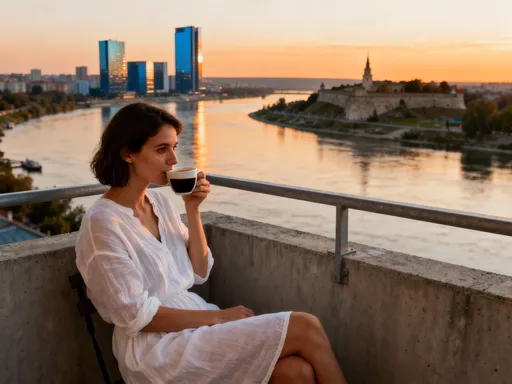
Belgrade isn’t just about bustling markets and hidden boutiques—some of the city’s best views come from unexpected shopping spots. I never expected that browsing designer stores or hunting vintage treasures would lead me to breathtaking panoramas of the Sava and Danube rivers. From rooftop terraces to hillside malls, shopping here doubles as sightseeing. Trust me, you haven’t really seen Belgrade until you’ve watched the sunset from a store balcony with a coffee in hand.
Why Belgrade’s Geography Makes Shopping Viewpoints Unique
Belgrade’s position at the confluence of the Sava and Danube rivers shapes more than its history—it defines its visual rhythm. The city unfolds across rolling hills and riverbanks, creating natural elevation shifts that few capital cities can match. This varied topography means commercial areas are often built into slopes or perched near bluffs, transforming ordinary shopping into an experience layered with perspective. In neighborhoods like Zemun, Dorćol, and Savamala, entering a boutique isn’t just about fashion—it can mean stepping onto a balcony suspended above the water, where the city’s two great rivers meet in a slow, shimmering embrace.
The contrast between old and new enhances these views. Centuries-old stone buildings stand beside sleek glass-fronted stores, and cobblestone alleys give way to modern pedestrian zones. This blend of architectural eras creates a dynamic visual texture, especially when seen from above. The city does not flatten its contours for convenience; instead, it embraces them, allowing elevation changes to become part of daily life. As a result, a simple errand can lead to an unexpected vista—one moment you’re trying on shoes, the next you’re gazing across the Danube as a barge glides silently downstream.
What makes this so rare is how seamlessly Belgrade integrates view and venue. In flat urban centers, panoramic sights usually require a trip to a dedicated observation deck or a climb to a museum’s top floor. Here, the view comes to you—often unannounced. A staircase inside a vintage shop might open onto a quiet terrace overlooking treetops. A café above a bookstore might face west, perfectly aligned for golden hour. These are not tourist traps but organic features of the city’s layout, where commerce and scenery coexist without pretense. For visitors, this means every shopping decision holds the potential for discovery—not just of a perfect scarf or handmade soap, but of a new way to see the city.
Zemun’s Riverside Promenade: Where Local Markets Meet River Vistas
Zemun, one of Belgrade’s oldest districts, feels like a village nestled within the capital. Its riverside promenade, lined with cobbled streets and Austro-Hungarian architecture, offers one of the most authentic shopping experiences in the city—complete with panoramic rewards. As you stroll along the Danube, small vendors display handwoven textiles, dried herbs, and jars of wildflower honey. Artisans sell wooden carvings and embroidered table linens, while local farmers offer fresh cheeses wrapped in waxed paper. The air carries the scent of grilled corn and roasted nuts, mingling with the faint mineral tang of river mist.
What sets Zemun apart is how naturally the shopping blends with the scenery. Many of its small shops are built slightly above the riverbank, their floors raised to avoid seasonal flooding. This subtle elevation means that even a quick stop for a coffee or a pair of leather gloves comes with an elevated perspective. From these vantage points, the Danube stretches wide and calm, reflecting the sky in shifting shades of blue and gold. During golden hour, the light washes over the water in warm waves, turning the opposite bank into a silhouette of trees and distant hills.
Some of the best views come from unmarked spots—like the corner bakery with a window seat facing the river, or the antique shop whose back room opens onto a private terrace. These are not advertised as viewpoints, yet they function as such, offering intimate moments of stillness amid the bustle. The experience is slow, unhurried, and deeply local. Tourists walk alongside elderly residents who come for their daily bread, and children chase pigeons near the water’s edge. There’s no pressure to buy; browsing is enough. And yet, every purchase feels meaningful, tied to the place and its rhythms.
For those seeking souvenirs with soul, Zemun delivers. A hand-painted ceramic bowl, a jar of thyme honey, or a linen tea towel becomes more than an object—it becomes a memory anchored in light and water. The district proves that shopping doesn’t have to be transactional to be valuable. Here, the act of choosing is part of the journey, and the view is never an afterthought.
Ušće Shopping Center: A Modern Mall with Sky-High Perspectives
While some travelers dismiss shopping malls as generic or soulless, Ušće Shopping Center defies that stereotype. Located near the confluence of the Sava and Danube, it occupies a prime position where the city’s two rivers meet. Its glass-walled upper levels face west, offering one of the clearest, most expansive sunset views in Belgrade. During late afternoon, the mall’s outdoor terraces fill with people not just for coffee, but for the spectacle of light spilling across the water. The sky shifts from pale gold to deep amber, then soft violet, all framed by the silhouette of New Belgrade’s high-rises in the distance.
The mall itself hosts a mix of international brands and local boutiques, from global fashion chains to Serbian designers offering modern takes on traditional embroidery. But the real attraction lies in the architecture’s openness. Large windows and open-air walkways allow sightlines to stretch uninterrupted. A quick break between stores becomes a moment of contemplation—watching clouds drift over the hills, or spotting a lone cyclist moving along the river path. On weekends, families gather at the rooftop restaurants, children pointing at passing boats while parents snap photos of the skyline.
What makes Ušće special is how it balances convenience with beauty. It’s easy to access by public transport or car, making it a practical stop for both locals and visitors. Yet it doesn’t sacrifice atmosphere for efficiency. The outdoor terraces, often overlooked, are designed for lingering. Benches line the edges, and potted trees provide dappled shade during the day. Even in winter, when the air is crisp and the rivers run gray, the view retains its power—a reminder of the city’s vastness and quiet strength.
For travelers planning their route, Ušće serves as a midday anchor. After morning exploration in Zemun, it offers a chance to rest, recharge, and reorient. A sandwich from a local deli, a hot drink from a Serbian coffee brand, and ten minutes of sky-watching can reset the senses. And because the mall stays open late, it’s also ideal for catching twilight—when the city’s lights begin to flicker on, one by one, like stars coming to life.
Dorćol’s Boutiques and Hidden Courtyards with Elevated Glances
Dorćol, a neighborhood of narrow streets and eclectic charm, is Belgrade’s creative heartbeat. Once a working-class district, it has evolved into a hub for independent designers, vintage collectors, and artisan makers. Its boutiques are tucked behind weathered facades, their entrances easy to miss if you’re not paying attention. Inside, you’ll find curated collections—hand-dyed scarves, upcycled leather bags, and ceramic jewelry inspired by folk patterns. But beyond the products, Dorćol offers something rarer: hidden viewpoints that feel like secrets shared in confidence.
Many of its older buildings are built on slight inclines, and behind their front doors lie quiet courtyards that rise with the land. Some of these spaces are private, accessible only to residents. Others, attached to concept stores or café-boutiques, welcome visitors. Step into one of these raised courtyards, and the city suddenly opens up. Rooftops stretch in every direction, interrupted by church spires and the occasional poplar tree. From certain angles, you can see the river’s curve, the green dome of a distant monastery, or the slow arc of a crane over the port.
These viewpoints are not dramatic in the way of mountaintop vistas. Instead, they are intimate, almost domestic. A wrought-iron table under a pergola, a wooden bench beside a potted fig tree—these are the seats from which you watch the world pass below. The sound of laughter drifts up from a courtyard bar, and the scent of jasmine fills the air in summer. Time slows. The city feels close enough to touch, yet distant enough to appreciate.
Some of the best experiences come from simply asking. A shopkeeper might gesture toward a back staircase: “Up there—nice view.” Or a barista might say, “Sit on the terrace if you want to see the sunset.” These moments are unscripted, uncommercialized. They reflect a culture where beauty is not locked behind ticket booths but shared freely. For visitors, the reward is a sense of discovery—not of a landmark, but of a feeling. Dorćol reminds us that the most meaningful views are often the ones we stumble upon, not the ones we chase.
Savamala Street Markets and Up-and-Coming Urban Vistas
Savamala, once a forgotten industrial zone, has emerged as one of Belgrade’s most dynamic neighborhoods. Its transformation began with artists and entrepreneurs reclaiming abandoned warehouses, and today it pulses with creative energy. Pop-up markets, street art installations, and experimental fashion stores define its character. But what truly sets Savamala apart is its proximity to the Sava River. Many of its repurposed buildings now feature large windows, rooftop extensions, or open terraces that frame sweeping views of the water and the opposite bank’s skyline.
Weekend markets often set up near the river’s edge, where long tables offer craft beer, grilled sausages, and handmade pastries. Shoppers move between stalls, pausing to take photos or simply stand at the railing, watching the current glide past. The raw, unfinished quality of the area adds to its appeal—exposed brick, steel beams, and graffiti-covered walls create a backdrop that feels alive, in motion. This is not a polished tourist district but a living neighborhood, where change is constant and authenticity is prized.
Some of the best vantage points are found inside converted lofts that now house concept stores. A staircase leads to a second-floor gallery where vintage clothing hangs beside local art. At the back, a glass door opens onto a narrow balcony. From here, the view stretches across the Sava to the illuminated towers of New Belgrade. At night, the water reflects the city’s lights like a mirror, broken only by the wake of a passing boat. The contrast between the industrial past and the vibrant present is palpable, making every glance feel layered with meaning.
For visitors, Savamala offers a different kind of shopping—one that values experience over acquisition. You might leave with a hand-printed T-shirt or a zine from a local artist, but what stays with you is the atmosphere: the hum of conversation, the beat of music from an open studio, the way the light shifts as evening falls. It’s a place where commerce and culture collide, and where every corner holds the possibility of surprise.
Knez Mihailova Street: Classic Shopping with Periodic Panoramic Breaks
Knez Mihailova Street, Belgrade’s most famous pedestrian thoroughfare, is often crowded with tourists and locals alike. Lined with global fashion brands, bookstores, and souvenir shops, it serves as the city’s commercial spine. While much of the street is flat and straight, subtle elevation changes occur near Republic Square and the approach to Kalemegdan Fortress. These shifts, though minor, create opportunities for elevated perspectives—especially from the upper floors of historic buildings that now house cafés, boutiques, and galleries.
One of the most rewarding experiences is timing a coffee break at one of these higher-level cafés during peak hours. From a window seat, you can watch the rhythm of the street below—the flow of pedestrians, the pause of a street musician, the sudden scatter of pigeons. The architecture frames the scene like a living diorama, with baroque facades and wrought-iron balconies adding depth and texture. In the distance, the green treetops of the fortress park rise above the rooftops, offering a glimpse of the rivers beyond.
These moments of observation are not passive. They invite reflection on the city’s pulse, its energy, its contradictions. A woman in a business suit walks past a teenager in a band T-shirt; a street vendor sells roses beside a luxury watch store. The street is a cross-section of Belgrade life, and viewing it from above adds a layer of clarity. You see patterns—the way people move, where they stop, how they interact with space.
For shoppers, this means Knez Mihailova offers more than products. It offers perspective. A quick detour to an upper-floor gallery or café can reset your pace, giving you a chance to breathe and re-engage. And because the street connects so many key areas, it serves as a natural anchor for longer walks. Start here, then branch out to quieter neighborhoods, carrying the memory of the city’s heartbeat with you.
How to Plan a Shopping Route That Maximizes Both Style and Scenery
To fully experience Belgrade’s unique blend of shopping and sightseeing, it helps to plan with both aesthetics and comfort in mind. Begin in Zemun in the morning, when the light is soft and the air is cool. Wander the riverside promenade, sampling local foods and browsing handmade goods. Allow time for a slow breakfast at a riverside café, watching boats drift by as you sip strong Serbian coffee.
By midday, make your way to Ušće Shopping Center. The short trip across the river offers a change of pace—from historic charm to modern convenience. Use the mall as a resting point: grab a light meal, recharge your phone, and head to the upper terraces for a panoramic break. If the weather is clear, stay long enough to see the sunlight shift across the skyline.
In the afternoon, cross into Savamala. Explore the street markets and converted warehouses, letting curiosity guide you. Look for rooftop access or large windows that frame the river. If you’re lucky, you’ll find a pop-up bar with outdoor seating—perfect for a late-day drink as the city begins to light up.
End your day in Dorćol, where the mood turns intimate and relaxed. Wander its side streets, peek into courtyards, and stop at a boutique café for tea. As evening falls, find a raised terrace with a view of the river and the fortress. This is where Belgrade reveals its quiet magic—the soft glow of lanterns, the distant hum of music, the way the water holds the sky’s last light.
Wear comfortable shoes, carry a reusable bag, and travel light. Check opening hours, especially for smaller boutiques that may close early or on Mondays. Weekdays offer fewer crowds and more personal interactions with shopkeepers. And always allow room for spontaneity—a sudden rain shower, a street performance, a conversation with a local. These unplanned moments often become the most memorable.
This route balances movement and stillness, discovery and reflection. It honors both the practical and the poetic, ensuring that every purchase comes with a view, and every view becomes part of your story.
Conclusion
Shopping in Belgrade is more than retail therapy—it’s a way to experience the city’s soul from unique heights and hidden corners. These viewpoints aren’t add-ons; they’re woven into the fabric of where and how locals buy, browse, and connect. Whether you’re sipping coffee on a mall terrace, browsing vintage finds in a hillside courtyard, or watching the sunset from a riverside market, the city reveals itself in layers.
The combination of natural geography, architectural contrast, and cultural openness makes Belgrade’s shopping experience unlike any other. You don’t have to choose between beauty and utility—here, they coexist. Every neighborhood offers its own rhythm, its own light, its own quiet moment of clarity.
By choosing spots that blend style with scenery, visitors don’t just take home souvenirs—they carry back memories framed by rivers, sky, and light. The city teaches us that the best experiences are often found where we least expect them: in a shop doorway, on a hidden staircase, at a window overlooking the water.
Next time you shop in a new city, ask: Can this place give me both beauty and a bag? In Belgrade, the answer is always yes.