You’ve Never Tasted Siberia Like This – A Slow Bite Through Novosibirsk
When I first landed in Novosibirsk, I’ll admit—I didn’t expect much. Siberia? Cold. Remote. But what unfolded was a food journey I never saw coming. Slowing down changed everything. From steaming pelmeni in hidden courtyards to warm, honey-laced kumys in local markets, each bite told a story. This isn’t just eating—it’s understanding a culture, one slow, soulful meal at a time. In a city often passed through on the Trans-Siberian Railway, few pause long enough to taste its rhythm. Yet those who do discover a culinary heartbeat that pulses beneath the concrete, shaped by resilience, seasonality, and deep-rooted generosity. Novosibirsk is not merely a gateway to Siberia; it is a living archive of flavors, preserved through generations and quietly evolving with modern life.
Why Slow Travel Works Best in Siberia’s Largest City
Novosibirsk, often overlooked as a mere transit stop between Moscow and Vladivostok, is in fact the cultural and intellectual epicenter of Siberia. With a population exceeding 1.6 million, it stands as the largest city in the region, home to Russia’s most prestigious scientific institutes, theaters, and universities. Yet beyond its academic reputation lies a quieter truth—one best uncovered through the deliberate pace of slow travel. When visitors rush through, they see only broad avenues, monumental Soviet architecture, and a climate that can seem forbidding. But staying longer reveals a different reality: a city where meals stretch for hours, where recipes are passed down like heirlooms, and where food is not just sustenance but an act of care.
Slowing down allows travelers to witness how Novosibirsk’s history has shaped its palate. Founded in 1893 as a rail hub, the city grew from a small settlement into a major urban center, drawing people from across the Russian Empire and later the Soviet Union. This blend of cultures—Ukrainian, Tatar, German, and indigenous Siberian—created a culinary mosaic that remains vibrant today. A rushed diner might order borscht without noticing the subtle variations in broth color or the addition of local herbs. But someone who lingers, perhaps sharing a table with a local family, begins to see the nuances: the use of smoked meat in winter versions, the preference for beet kvass in summer, the way sour cream is stirred in with ritualistic care.
The rhythm of life in Novosibirsk is one of patience and endurance, shaped by long winters and short growing seasons. This is not a place of quick bites or fast service. Meals are events, often beginning with a round of tea and ending with preserves spooned from glass jars stored in cold pantries. To eat here is to align with that rhythm. Locals appreciate when a guest takes time to savor, to ask about ingredients, to accept a second helping. There is a quiet pride in offering food, and it is only through extended presence that one is truly invited into that world. The difference between a tourist and a welcomed guest is measured not in language fluency, but in willingness to sit, listen, and return the warmth.
Arrival & First Impressions: From Concrete to Comfort Food
Stepping off the plane or train, Novosibirsk greets with a sense of scale—wide boulevards, towering apartment blocks, and the distant shimmer of the Ob River. In winter, a silver fog often hangs over the city, softening the edges of its monumental buildings. The architecture speaks of ambition: grand columns, sweeping staircases, and mosaics depicting industrial progress. At first glance, it feels austere, even impersonal. But within minutes of arriving, most travelers find themselves drawn indoors, not just for warmth, but for the promise of comfort found in a bowl of hot soup.
My first meal in the city was in a modest canteen near the central station, the kind of place where workers in wool coats line up with metal trays. The menu was simple: borscht, buckwheat porridge, and boiled potatoes with dill. I chose the borscht, not knowing then how often I would return to it in the coming weeks. What surprised me was not just the depth of flavor—the sweet earthiness of beets balanced with a touch of vinegar—but the warmth of the woman serving it. She added an extra dollop of sour cream, nodded approvingly as I stirred, and said only, “Eshchyo?”—“More?” That single gesture, small and unscripted, shifted my entire perception. Here was hospitality not performed for tourists, but offered freely, almost instinctively.
That moment revealed the heart of Novosibirsk’s food culture: its generosity is not loud, but deep. The city’s exterior may seem stern, shaped by decades of Soviet planning and Siberian winters, but inside homes, kitchens, and communal eateries, there is an abundance meant to nourish both body and spirit. Even in the coldest months, when daylight lasts only a few hours, kitchens remain warm and active. Grandmothers rise early to bake pirozhki; families gather around tables laden with pickled vegetables, cured meats, and jars of homemade jams. These meals are not just about survival—they are acts of resistance against the cold, affirmations of life and connection.
The Heartbeat of the City: Exploring Local Markets
If Novosibirsk has a culinary soul, it beats strongest in its markets. Places like the Krasny Avenue Market and Rodnik are not merely places to buy food—they are living spaces where tradition, seasonality, and community converge. On any given morning, especially in late summer and early autumn, these markets buzz with activity. Wooden stalls overflow with cabbages the size of toddlers, baskets of wild mushrooms foraged from nearby forests, and pyramids of golden honeycomb still dripping with nectar. The air carries a complex perfume: the tang of pickled cucumbers, the smokiness of dried fish, the sweetness of sun-warmed berries.
Walking through these markets is an education in Siberian terroir. Unlike supermarkets, where produce is standardized and often imported, here every item tells a story of origin. A vendor might explain how her cranberries were gathered from a bog near the Tom River, or how her smoked omul—a fish native to Lake Baikal—is cured using a family recipe passed down for three generations. These are not sales pitches; they are invitations to understand. And often, they come with a sample—a sliver of cheese, a spoonful of berry preserve, a sip of unpasteurized kvas fermented in a crock at home.
One of the most memorable encounters occurred at a small stall run by an elderly woman selling syrniki, fried quark pancakes often served with sour cream or jam. She spoke little English, but motioned for me to try one fresh from the pan. The outside was crisp, the inside soft and slightly sweet. As I ate, she smiled and said, “Dorogoy,” a term of endearment meaning “dear one.” That moment—simple, fleeting—captured the essence of these markets. They are not transactional spaces but relational ones, where food becomes a language of care. Buying ingredients here is not just about what goes on the plate, but about the connections formed in the process.
Home Dining: When Strangers Invite You to the Table
In many cultures, dining at a local’s home is a rare privilege. In Novosibirsk, it can feel almost inevitable—if you stay long enough. Russians are known for their hospitality, but in Siberia, it takes on a deeper meaning. Food is a way of saying, “You are safe here. You are welcome.” I was fortunate to be invited into a family home during a late autumn visit, hosted by a couple who ran a small language exchange program. Their apartment, like many in the city, was modest but immaculate, with lace curtains and framed photos of ancestors.
The meal began with tea—strong, dark, and served in glass holders with ornate metal inserts. A tray of jams appeared: blackcurrant, raspberry, and sea buckthorn, each spooned into a saucer and stirred into the tea to taste. Then came the food: pirozhki stuffed with cabbage and egg, Olivier salad layered with potatoes, carrots, peas, and mayonnaise, and a platter of boiled potatoes drenched in sour cream and fresh dill. Every dish had been made that morning. Nothing was store-bought. Even the bread, a dense rye loaf, had been baked in a neighbor’s oven, shared as a gesture of goodwill.
What struck me most was not the food itself, familiar as it was from Russian cuisine, but the ritual surrounding it. Courses were not rushed. Conversation flowed slowly, punctuated by refills of tea and offers of more food. The hostess watched carefully, ready to replenish any empty plate. When I complimented the pickled mushrooms, she immediately wrapped a jar for me to take home. “For your family,” she said. In that moment, I understood that in Novosibirsk, sharing food is not an act of generosity—it is an expression of identity. To feed someone is to say, “You belong.” And for a traveler far from home, that message is more nourishing than any meal.
Siberian Specialties You Won’t Find in Guidebooks
While borscht and pelmeni are well-known, Novosibirsk’s true culinary treasures lie in its lesser-known dishes—those born of necessity, shaped by the land, and preserved through oral tradition. One such dish is tykvenny kisel, a thick, translucent pudding made from pumpkin, cornstarch, and sugar, often flavored with lemon or vanilla. Served warm or chilled, it is a staple in many households during the fall, when pumpkins are harvested in abundance. Unlike the sweetened gelatins found in the West, kisel has a humble elegance, its flavor clean and comforting, a reminder of how Siberians transform simple ingredients into sustenance.
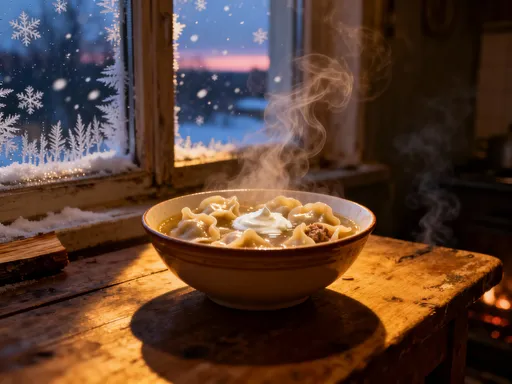
Another regional specialty is Siberian pelmeni, which differ from their European counterparts in both filling and size. Made with a blend of beef, pork, and sometimes wild game like venison, these dumplings are often flavored with wild herbs foraged from the taiga—dill, parsley, and occasionally juniper berries. The dough is rolled paper-thin, and the pelmeni are frozen in large batches, a practical response to long winters. When boiled, they are served with butter, sour cream, or a splash of vinegar. Eating them is an act of participation in a centuries-old tradition of preservation and resourcefulness.
One afternoon, I visited a small bakery tucked into a residential courtyard, known only to locals. There, an elderly baker demonstrated how to make pryaniki, spiced honey cakes that have been a part of Russian celebrations for generations. She used no written recipe, measuring flour and honey by feel, adding ground cinnamon, cloves, and nutmeg to taste. The cakes were baked in a wood-fired oven, their crusts dark and glossy. As she handed me one, still warm, she said, “This is how my grandmother taught me. No machine can do this right.” Her words echoed a truth that runs deep in Novosibirsk: some things cannot be mass-produced. They must be made by hand, with time and care.
Café Culture & Modern Twists on Tradition
While tradition runs deep, Novosibirsk is not frozen in time. A new generation of chefs and entrepreneurs is reimagining Siberian cuisine, blending ancestral recipes with modern sensibilities. This evolution is most visible in the city’s growing café culture, where third-wave coffee meets Soviet-era nostalgia. In cozy, minimalist spaces with exposed brick and houseplants, baristas serve birch sap lattes—espresso with steamed birch water, a nod to the springtime tapping of trees in the surrounding forests. Others offer buckwheat croissants, where the nutty grain is incorporated into flaky pastry, creating a uniquely Siberian fusion.
These cafés are not rejecting tradition but reinterpreting it. One popular spot features a menu inspired by Soviet school lunches, but elevated: vareniki (dumplings) filled with goat cheese and forest mushrooms, served with a dill-infused crème fraîche. Another reinvents kasha (porridge) with quinoa and roasted root vegetables, presenting it as a health-conscious bowl for urban professionals. These dishes are not gimmicks; they reflect a genuine pride in local ingredients and a desire to make them relevant to contemporary life.
What makes this culinary shift remarkable is its authenticity. Unlike in some cities where fusion is driven by tourism, Novosibirsk’s food evolution is homegrown, led by young people who have studied abroad but chosen to return. They speak of sustainability, seasonality, and terroir with the same reverence as their grandparents spoke of preserving pickles and baking bread. Their menus are not designed to impress foreigners but to reconnect locals with their roots in a modern context. In doing so, they ensure that Siberian cuisine does not become a museum exhibit but a living, breathing tradition.
Practical Tips for a Food-Focused Slow Journey
For those considering a culinary journey through Novosibirsk, timing is essential. The best months to visit are late summer and early autumn, when markets overflow with fresh produce and outdoor festivals celebrate the harvest. Winters are long and cold, but they offer their own rewards: steaming bowls of solyanka (a sour soup with meat and pickles), freshly baked blini with caviar, and the chance to experience home hospitality at its most intimate. Spring, though brief, brings the first greens and the tapping of birch trees, a seasonal ritual worth witnessing.
To find authentic food experiences, avoid large tourist-oriented restaurants. Instead, seek out family-run guesthouses, local food tours led by residents, or community events like church bazaars and neighborhood feasts. Many of the best meals happen off-menu, shared in homes or small eateries known only by word of mouth. Learning a few basic Russian phrases—“Spasibo” (thank you), “Vkusno” (delicious), “Chto eto?” (what is this?)—can open doors and deepen connections.
Staying in residential neighborhoods, rather than the city center, allows for immersion in daily life. Morning walks often lead to spontaneous encounters with vendors selling homemade cheese or freshly baked bread from their windows. Visiting markets early, before the crowds, offers the best selection and the most time for conversation. And always carry a small gift if invited to a home—chocolate, flowers, or a bottle of wine are appreciated, though the host will likely refuse at first out of politeness.
Most importantly, approach the journey with respect and curiosity. Novosibirsk is not a performance for outsiders. Its food culture thrives on authenticity, patience, and mutual care. By moving slowly, eating mindfully, and listening more than speaking, travelers do more than taste a place—they become part of its story.
Novosibirsk taught me that the deepest travels aren’t measured in miles, but in moments—like sharing a jar of homemade pickles with someone who calls you “dorogoy.” Its food culture, rich and resilient, opens doors no guidebook can. By moving slowly, we don’t just taste a place—we become part of it. And that, more than any dish, is what lingers.