How I Found My Rhythm with Simple Qigong Every Morning
For years, I felt out of sync—tired but restless, busy but unproductive. Then I discovered qigong, not as a cure, but as a quiet reset. Just ten minutes a day helped me reconnect with my body’s natural rhythm. No hype, no struggle—just gentle movement and breath. This is how I finally learned to flow with my day, not fight against it. What began as a skeptical experiment turned into a cornerstone of daily well-being. It didn’t demand hours or special equipment. Instead, it offered something rare in modern life: a moment of stillness that quietly rebuilt my energy, focus, and sense of balance. This is not a miracle cure, but a return to a deeper rhythm—one that has always been there, waiting to be noticed.
The Problem: Living Out of Rhythm
Many people today feel constantly drained, not because they do too much, but because their daily routines clash with their body’s natural energy cycles. Life moves fast—alarms blare before sunrise, screens glow late into the night, and the pressure to stay productive rarely lets up. In this environment, fatigue is often ignored, stress becomes normal, and mental fog is mistaken for focus. The body sends signals—difficulty waking, afternoon slumps, trouble falling asleep—but these are frequently dismissed as unavoidable parts of adult life. Over time, this disconnect takes a toll. The result is a state of chronic imbalance, where energy dips and spikes unpredictably, mood swings become common, and even simple tasks feel overwhelming.
From the perspective of traditional Chinese medicine (TCM), health is not just the absence of illness, but the presence of harmony. The body is seen as an interconnected system that thrives when it moves in alignment with natural rhythms—the rising and setting of the sun, the changing seasons, and the internal ebb and flow of energy known as Qi (pronounced “chee”). When this rhythm is disrupted, the system falters. Qi becomes stagnant or depleted, leading to physical and emotional symptoms. Insomnia, digestive issues, low motivation, and persistent tension are not random ailments; they are signs that the body is out of sync. Modern lifestyles, with their artificial lighting, constant stimulation, and irregular schedules, often override these natural cues, making it harder to regain balance without intentional practice.
Reconnecting with rhythm isn’t about returning to a pre-modern way of life. It’s about making small, deliberate choices that honor the body’s innate timing. Just as a musician must tune their instrument before playing, the body benefits from daily tuning—a way to reset and recalibrate. Without this, we risk living in a state of perpetual dissonance, where effort does not lead to fulfillment, and activity does not bring vitality. The good news is that restoration is possible. It doesn’t require drastic changes, but rather consistent, gentle practices that guide the body back to its natural flow. One of the most accessible tools for this is qigong.
What Is Qigong and Why It Works for Rhythm Reset
Qigong is a centuries-old practice rooted in Chinese healing traditions, combining slow, deliberate movement, mindful breathing, and focused awareness. The word itself means “cultivating energy”—Qi referring to vital life force, and gong meaning work or practice. Unlike high-intensity workouts that stress the body to build strength, qigong works differently. It doesn’t push; it invites. Its power lies not in exertion, but in restoration. Through gentle motions and coordinated breath, it activates the body’s self-regulating systems, helping to shift from a state of constant alertness to one of calm awareness.
One of the key reasons qigong is so effective for restoring rhythm is its impact on the autonomic nervous system. Most people spend too much time in the sympathetic state—“fight or flight”—where the heart races, muscles tense, and the mind stays vigilant. Qigong gently stimulates the parasympathetic nervous system, often called the “rest and digest” mode. This shift allows the body to recover, repair, and rebalance. The slow, rhythmic movements act as a signal to the brain that it is safe to relax. Over time, this helps reset the body’s baseline, making it easier to stay calm even in stressful situations.
Another important aspect of qigong is its emphasis on coordination between breath and motion. Each movement is paired with a specific breathing pattern, creating a natural rhythm that mirrors the body’s internal cycles. This synchronization serves as a kind of internal metronome, helping to regulate heart rate, blood pressure, and mental focus. When practiced regularly, this rhythmic pattern becomes familiar, offering a sense of grounding even when external life feels chaotic. Because the movements are simple and low-impact, qigong is accessible to nearly everyone, regardless of age, fitness level, or physical condition. No special equipment is needed—just a few square feet of space and a willingness to slow down.
My First Try: Skepticism to Surprise
I began qigong with more curiosity than hope. After years of trying various wellness trends—yoga, meditation apps, energy drinks, and intense morning workouts—nothing had created lasting change. When a friend suggested qigong, I was doubtful. The idea of standing still and swaying my arms gently seemed too simple to make a difference. I imagined it would be boring, maybe even a waste of time. But I was tired of feeling tired, so I decided to give it a real chance—ten minutes each morning, for one week.
The first few days were awkward. My arms felt stiff, my breathing was uneven, and my mind wandered constantly. I kept checking the clock, wondering if I was doing it “right.” There was no immediate transformation, no sudden burst of energy or clarity. But by the third morning, something shifted. I noticed I had slept more deeply the night before. I woke without hitting the snooze button, which was unusual for me. By day five, the midday fatigue that usually hit around 2 p.m. was milder. I didn’t need my usual second cup of coffee, and I felt less reactive during a stressful phone call with a client.
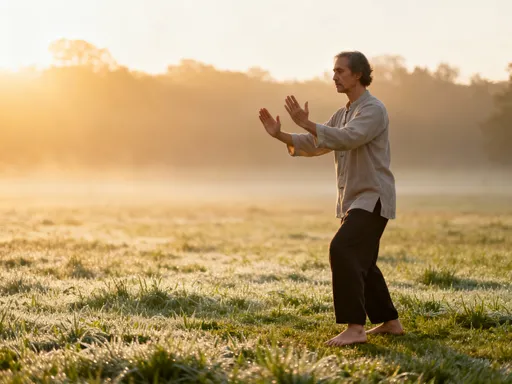
My routine was simple: five minutes of standing meditation, with feet shoulder-width apart and hands resting gently on the lower abdomen, focusing on slow, deep breaths. Then, two minutes of gentle arm sways—raising the arms in front and lifting them overhead like gathering energy, then lowering them back down. Finally, three minutes of diaphragmatic breathing, inhaling through the nose and expanding the belly, exhaling slowly through the mouth. That was it. No complex sequences, no spiritual chants, no special clothing. Just me, my breath, and a few quiet minutes before the day began. The real lesson wasn’t in the movements themselves, but in showing up consistently. Perfection didn’t matter. What mattered was the daily return—to the practice, to my body, to the present moment.
The Science Behind the Calm: What Research Says
While qigong has ancient roots, its benefits are increasingly recognized by modern science. Research in the field of mind-body medicine has found that practices like qigong can positively influence physiological markers of stress and well-being. For example, studies have shown improvements in heart rate variability (HRV), a key indicator of the body’s ability to adapt to stress. Higher HRV is associated with better emotional regulation, resilience, and overall health. Qigong’s rhythmic breathing patterns are believed to stimulate the vagus nerve, a major component of the parasympathetic nervous system, which helps slow the heart rate and promote relaxation.
Another area of interest is cortisol, the primary stress hormone. Chronic elevation of cortisol is linked to fatigue, weight gain, poor sleep, and weakened immunity. Regular qigong practice has been associated with reduced cortisol levels, suggesting that it helps the body manage stress more effectively. While individual results vary, the cumulative effect of daily practice appears to support a calmer nervous system and greater emotional stability. These changes don’t happen overnight, but over time, they create a new baseline—one where stress is less likely to spiral out of control.
Emotional regulation is another benefit supported by emerging evidence. People who practice qigong regularly often report feeling less anxious, more centered, and better able to handle daily challenges. This isn’t because life becomes easier, but because their internal response to difficulty changes. They become less reactive, more observant. The practice cultivates a kind of quiet awareness that allows space between stimulus and response—a space where choice becomes possible. It’s important to note that qigong is not a substitute for medical treatment. It does not claim to cure disease or replace therapy. Rather, it serves as a complementary practice that enhances overall well-being and supports the body’s natural healing capacity.
How to Build a Morning Qigong Habit (Even If You’re Busy)
The most common reason people don’t start a wellness practice is lack of time. But the beauty of morning qigong is that it doesn’t require hours—just a few minutes, consistently done. The key is to make it as easy as possible to begin. Start small. Three to five minutes is enough. Choose a consistent time, ideally right after waking, before checking your phone or diving into emails. This timing helps set the tone for the day, creating a buffer between sleep and activity. Wear comfortable clothing—loose pants and a soft top—and find a quiet corner of your home. If space is limited, even standing near your bed is fine.
Habit stacking—linking a new behavior to an existing one—can greatly increase adherence. For example, do your qigong routine immediately after brushing your teeth. Since brushing is already a non-negotiable part of your morning, it serves as a natural cue. You don’t have to remember to do qigong; it simply becomes the next step. Over time, this association strengthens, making the practice feel automatic rather than forced. If you miss a day, don’t judge yourself. Simply return the next morning. Progress, not perfection, is the goal.
Common obstacles include lack of motivation, distractions, or feeling too stiff to move. On days when energy is low, shorten the routine or focus only on breathing. Even one minute of mindful breath counts. If your mind is busy, acknowledge it without resistance—this is part of the process. The aim is not to empty the mind, but to gently guide attention back to the body and breath. Over time, this builds resilience not just physically, but mentally. The habit becomes less about achieving a specific outcome and more about honoring a daily commitment to yourself.
Listening to Your Body: Adjusting Based on Energy Levels
One of the most valuable lessons qigong teaches is the importance of listening to the body. Some mornings, energy feels full and expansive—on those days, gentle stretching and slightly larger movements may feel natural. Other days, the body feels heavy, sluggish, or tense. Forcing the same routine in both states can lead to frustration or strain. Instead, qigong encourages adaptability. On low-energy days, a seated practice may be more appropriate. Simply sit in a chair with feet flat on the floor, hands resting on the lap, and focus on slow, deep breathing. Even this minimal practice helps restore rhythm.
The concept of “effortless effort” is central to qigong. It means moving with awareness, not force. There is no goal to achieve, no pose to perfect. The practice is not about how far you can stretch or how long you can hold a position, but about the quality of attention you bring to each movement and breath. This mindset shift—from performance to presence—makes the practice sustainable over the long term. It removes the pressure to “get it right” and replaces it with curiosity and kindness.
Tuning in also helps prevent burnout. When the body is tired, pushing through sends a message that rest is unimportant. Qigong teaches the opposite—that rest is essential, and that true strength includes the ability to slow down. By adjusting the practice to match daily energy levels, you honor your body’s needs rather than override them. This builds trust between mind and body, reinforcing the idea that well-being is not a destination, but an ongoing relationship.
Beyond the Morning: Carrying Rhythm Into the Rest of Your Day
The benefits of morning qigong extend far beyond the few minutes of practice. When you start the day with awareness, that awareness tends to linger. Decisions become more intentional. Reactions become less automatic. You may find yourself pausing before responding to a stressful email, or choosing a nourishing snack instead of reaching for sugar. These small shifts are signs that the rhythm established in the morning is influencing the rest of your day.
Many practitioners notice improved focus and mental clarity. Without the usual morning fog, tasks feel more manageable. Meetings are approached with greater calm. Even household chores can be done with a sense of presence, turning routine activities into moments of mindfulness. Some women find that their sleep improves, not because they changed their bedtime routine, but because their body’s internal clock has begun to reset. The evening feels less chaotic, the transition to sleep smoother.
Qigong also encourages mindful pauses throughout the day. A deep breath before answering the phone, a moment of stillness while waiting for the kettle to boil—these micro-practices reinforce the rhythm cultivated in the morning. They serve as gentle reminders to return to the body, to the breath, to the present. Over time, the line between “practice” and “life” begins to blur. Qigong is no longer just something you do; it becomes a way of being. This is the essence of rhythm—not a rigid schedule, but a flowing alignment with your natural state.
The morning ritual becomes a touchstone, a daily anchor in a world that often feels unmoored. It doesn’t eliminate stress or solve every problem, but it changes your relationship to them. You move through challenges with greater resilience, not because you’ve become invincible, but because you’ve learned to return to center. That center—the quiet space within—is always accessible, and qigong helps you remember how to find it.
Qigong didn’t change my life overnight—but it changed how I move through it. By syncing with my body’s natural rhythm, I’ve found a quieter, steadier way to live. It’s not about fixing yourself; it’s about remembering how to flow. And that’s worth starting, one breath at a time.